Our current team consists of three student facilitators and one faculty supervisor. Our hope is that the four of us, as a small community, can model a decolonial, non-hierarchical way of being and then invite other people into it. In this regard, rather than understanding ourselves as leaders of this group who seek to control all that goes on in this space, we consider ourselves hosts of a blossoming community.
Where are We?
“I am where I theologize”
Oscar García-Johnson, Spirit Outside the Gate: Decolonial Pneumatologies of the American Global South
While we are each located in different geographical and social contexts, our social experiences overlap in our membership of the academic community of Fuller Theological Seminary. Fuller is an interdenominational evangelical seminary based in Pasadena, California though it has a significant presence in the rest of the US and internationally, largely through online media. Stay tuned for further reflections on how our environment shapes our community and our work!
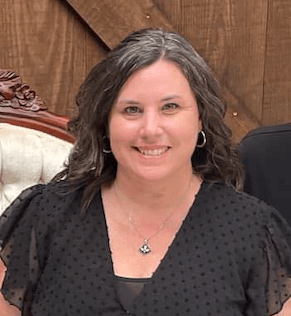
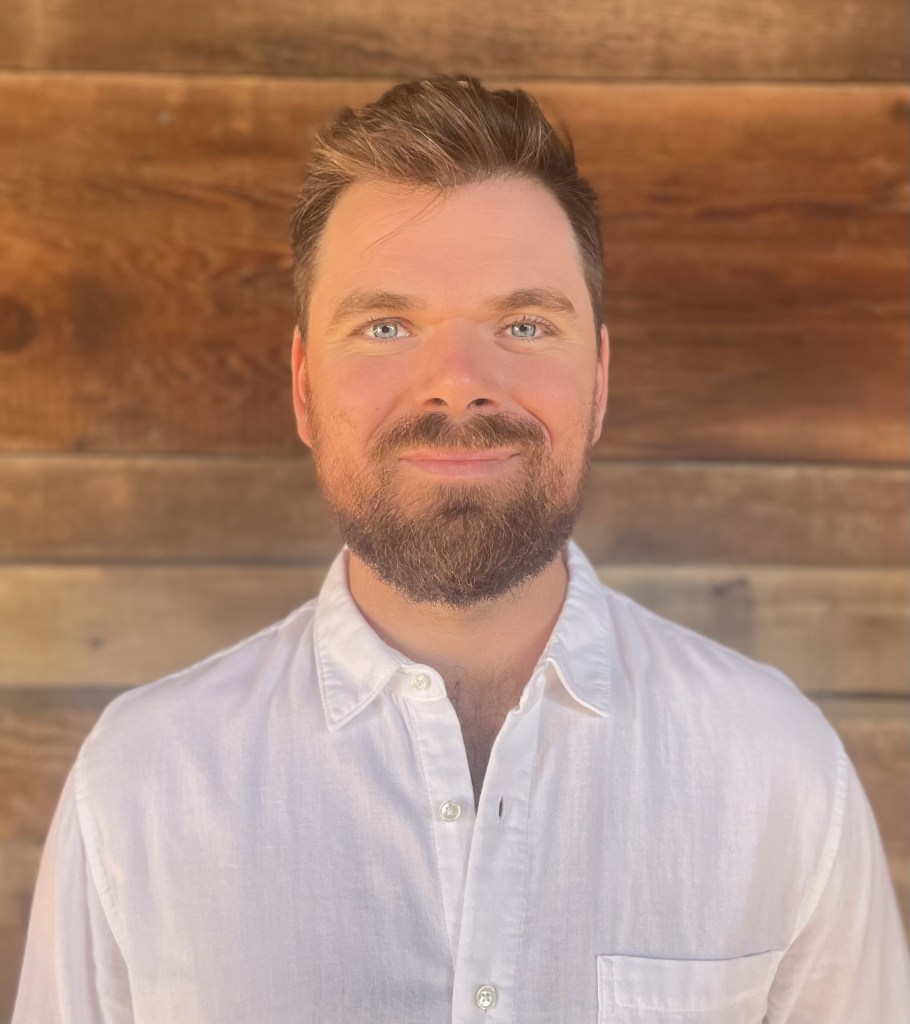
Who are We?Karen Lucas is a PhD student at Fuller Theological Seminary and an Archives Specialist for the North Carolina Conference of the International Pentecostal Holiness Church. Her focus area is Pentecostal Studies, and her research interests meet at the intersection of Pentecostal-Charismatic history, decolonial studies, and contemporary worship practices. She is also an ordained minister with a background in social work and community outreach and lives in eastern North Carolina with her family.Greta L. Bennett is a doctoral student in Public Theology at Fuller Theological Seminary, mentored by Dr. Sebastian Kim. Originally from San Antonio, Texas, she received a Bachelor of Business Administration from Howard University, a Master of Public Administration from Troy State University, a Master of Arts in Theology from Fuller Theological Seminary, and a certification in Nonprofit Management from the University of Tampa. Her doctoral research focuses on the intersection of public theology and public policy as it relates to African American Women’s Healthcare. Greta is active in several nonprofit organizations and is a published author and podcast host. Gregory Conarroe is a PhD student at Fuller Theological Seminary where he studies missiology and public theology under the supervision of Sebastian Kim. His present call to be spiritually and socially re-formed by the voices of his Indigenous brothers and sisters in Christ informs his research of Native North American contributions to (and critiques of) Christian mission made since the late 1960s. Before beginning his doctoral studies he studied cultural Anthropology and Christian Education at Wheaton College (IL) and received a Masters in World Christianity from the University of Edinburgh, UK. He is a fellow in Fuller’s Mouw Institute for Faith and Public Life and a participant in the Research in Indigenous Studies and Christianity (RISC) network.Oscar García-Johnson serves as Professor of Theology and Decolonial Studies at Fuller Theological Seminary. A native of Honduras, he pioneered the research methodology of Transoccidentality, integrating de/postcolonial studies, classical theologies, and US Latino/Latin American perspectives. Prior to joining Fuller in 2008, García-Johnson served for 11 years as a regional minister with the American Baptist Churches of Los Angeles, where he also planted four new churches in Southern California. A prolific author, his forthcoming works, Embracing Fear: Christian Reexistence in the Trump Era and Decolonial Love in Times of Hatred (Cascades Books, 2025), explore decolonial approaches to public theology and spiritual activism in contemporary US America.
What do We do?
The group’s purpose is to facilitate critical discussions, reflections, and actions at Fuller Theological Seminary inspired by decolonial studies. The group aims to foster an understanding of decolonial theory and its implications for theology, spirituality, education, missiology, and praxis within academic, ecclesial, and broader social contexts.
Who is this website for?
This website is the public “face” of our group. It is a resource for our student participants to continue to have “decolonial conversations” outside of our monthly meetings. But it is also a space where we will share and produce decolonial resources meant to edify the church, academy, and society at large.

 Decolonial Coversations